Part 3: Single String
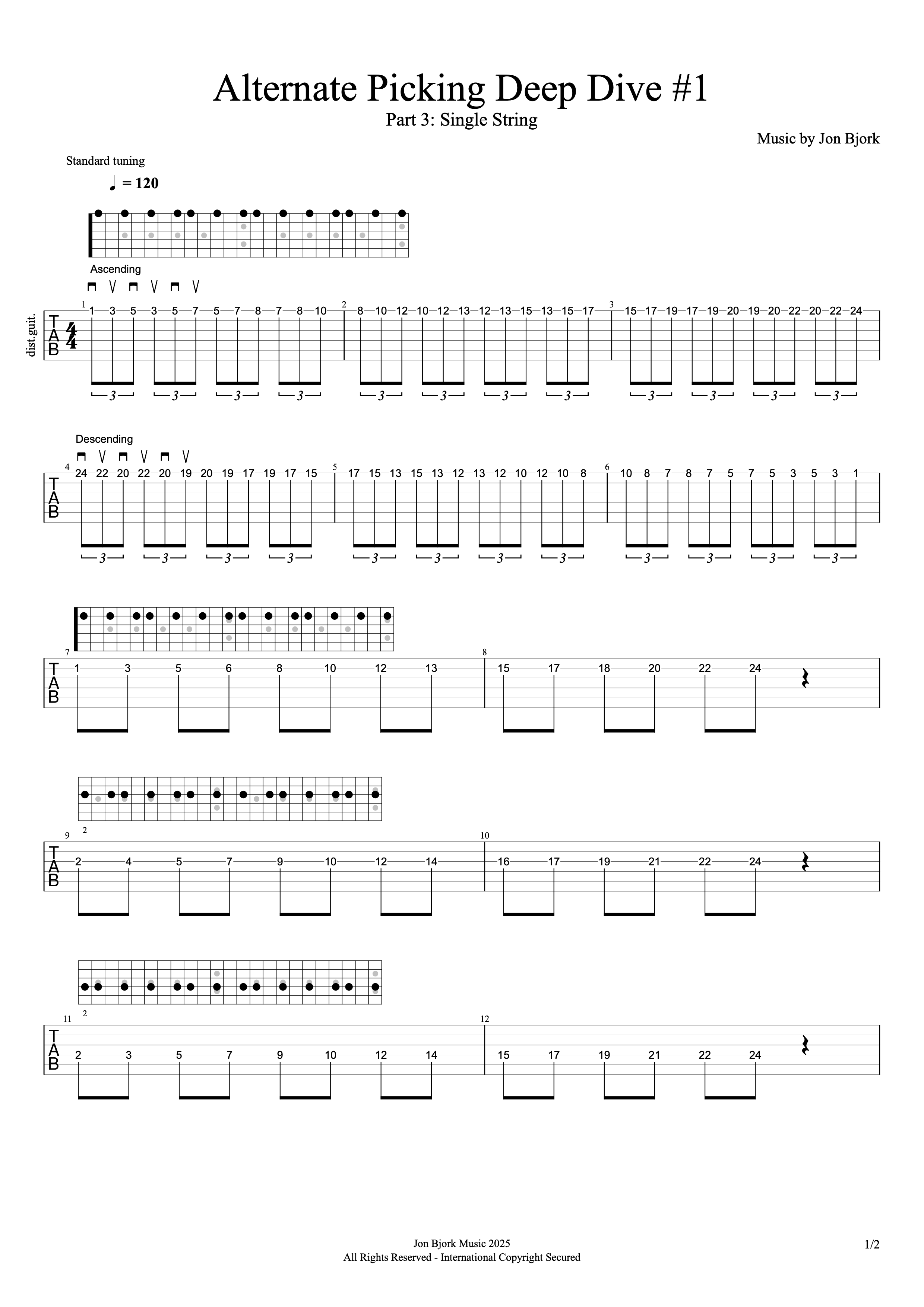
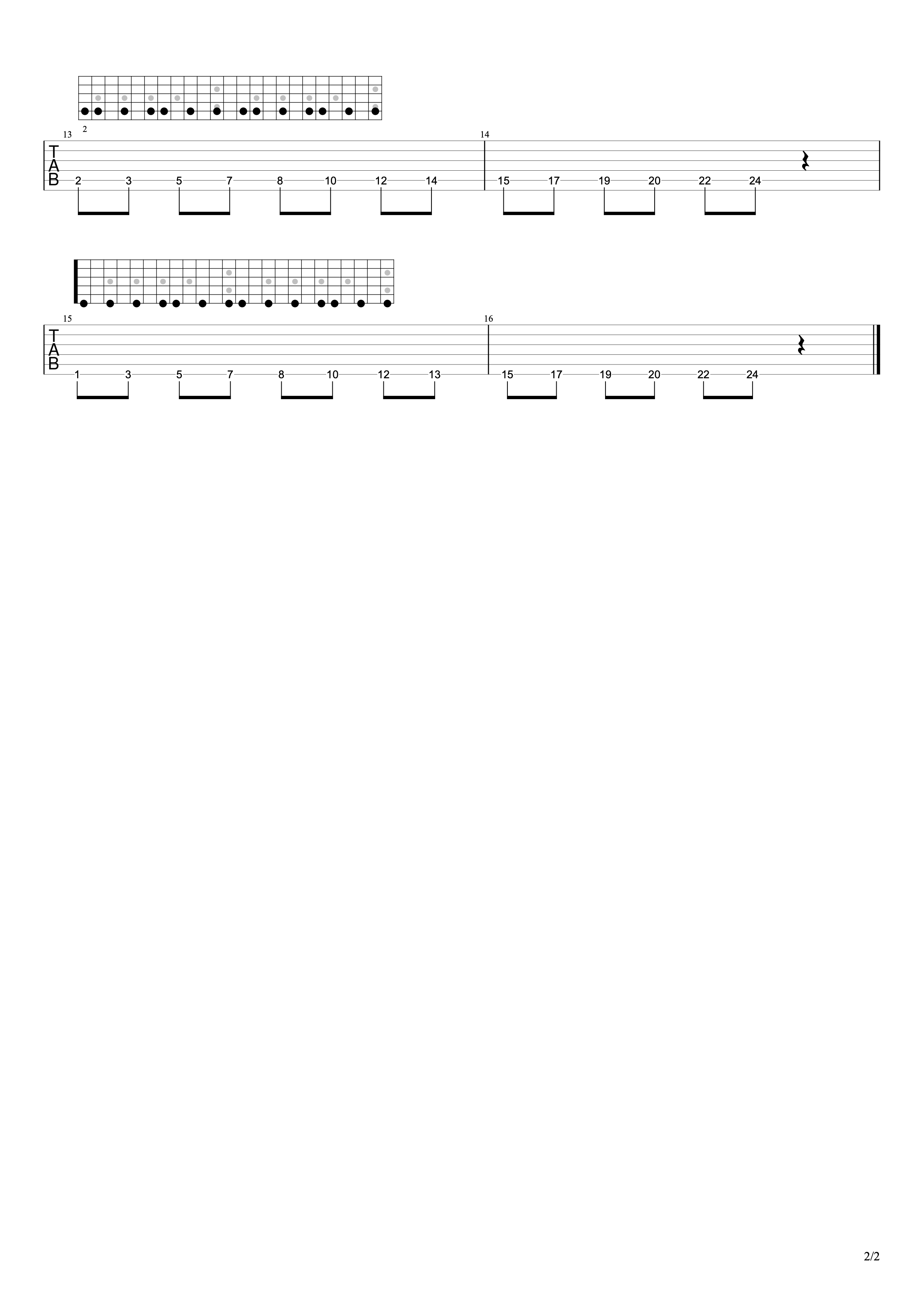
This routine focuses on playing scales on a single string at a time, and it's a crucial piece of the puzzle.
Single-string scale work is extremely valuable for two main reasons:
- Position shifting mastery. You'll get comfortable moving fluidly along the neck, which is key for unlocking the full fretboard and being able to shift into any position with confidence.
- Technical focus. By staying on one string, you eliminate the complexity of string changes and can zero in on perfecting your picking-hand motion and fretting-hand synchronization.
Together with the 6-string and 2-string routines, this covers about 80 to 90% of the shifting and mechanics you'll encounter when applying 3-note-per-string scales in real music.
✅ How to practice it:
- Start on the high E string.
- Play ascending groups of three notes at a time, using a 3-note-per-string scale.
- Then descend three notes at a time, starting from the top note.
- After completing one string, move down to the next string and repeat.
- Use the Transition Time practice tool to focus on efficient movement between notes.
- Tempo: max 80 bpm (quarter notes), or slower if needed for full control.
Be sure to watch the video lesson first so you understand exactly how to get the most out of this part of the routine. As with the previous lesson, the notation is just to get the exercise across, and the tempos are the ones outlined in the video.
Once you've done that, dive in, and if anything feels unclear, email me and I'll help you out.
Questions about this lesson? Get in touch →
Go further with The Practice Room
Every course I've made, the full tab and Guitar Pro library, structured practice programs, and the Practice Lab. One payment, and it's yours.
Join The Practice RoomWant a personal transformation with one-on-one access?
See the 12-Week Mastery Program →